
Our research and testing
Quality controlEvery material we offer goes through a technical verification phase, to guarantee consistent results on every production batch.
Quality is verified. Not assumed.
Screentech's research is born from collaboration with four international centres of excellence: three manufacturers specialised in producing high-end screen printing fabrics and one of the world's leading manufacturers of photosensitive emulsions.
This latter partner has dedicated research and development facilities and a team of dozens of chemists working daily on the study and evolution of screen printing emulsions.
The emulsions selected by Screentech are already developed for use with CTS (Computer to Screen) systems, both for standard stencils and, above all, for high-thickness applications. Naturally, to achieve correct performance, the CTS system's UV source must be properly compatible with the emulsion technology.
A significant production capacity
Our production network has around 600 people and almost 1,000 looms, operating 24 hours a day, 5 days a week.
This structure allows us to produce significant quantities of screen printing fabrics, from standard constructions to the most technical specifications, while paying particular attention to production stability and consistency.
Every fabric undergoes a multi-stage degreasing process and is subsequently stabilised through high-performance treatment systems, designed to minimise elongation and ensure the greatest possible stability during use.
Where deemed necessary, the fabric is also given plasma treatment. This treatment improves the surface characteristics of the thread and promotes emulsion adhesion, creating a more effective bond between fabric and stencil and contributing to the stencil's strength during the printing process.
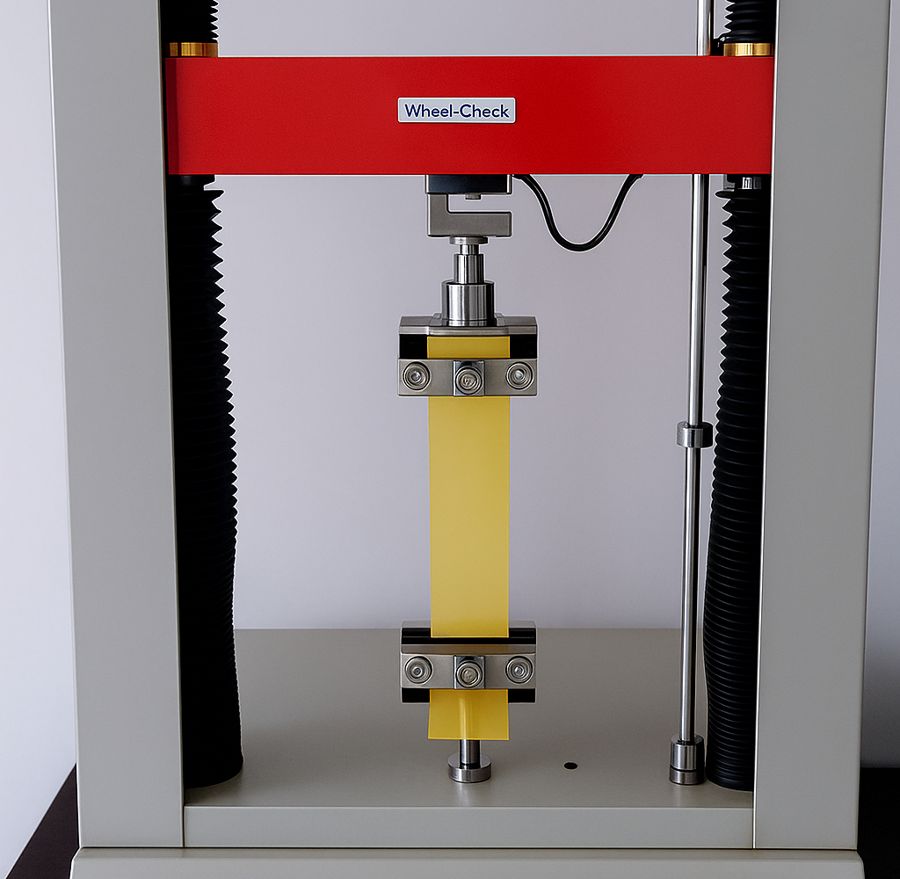
Measure before validating
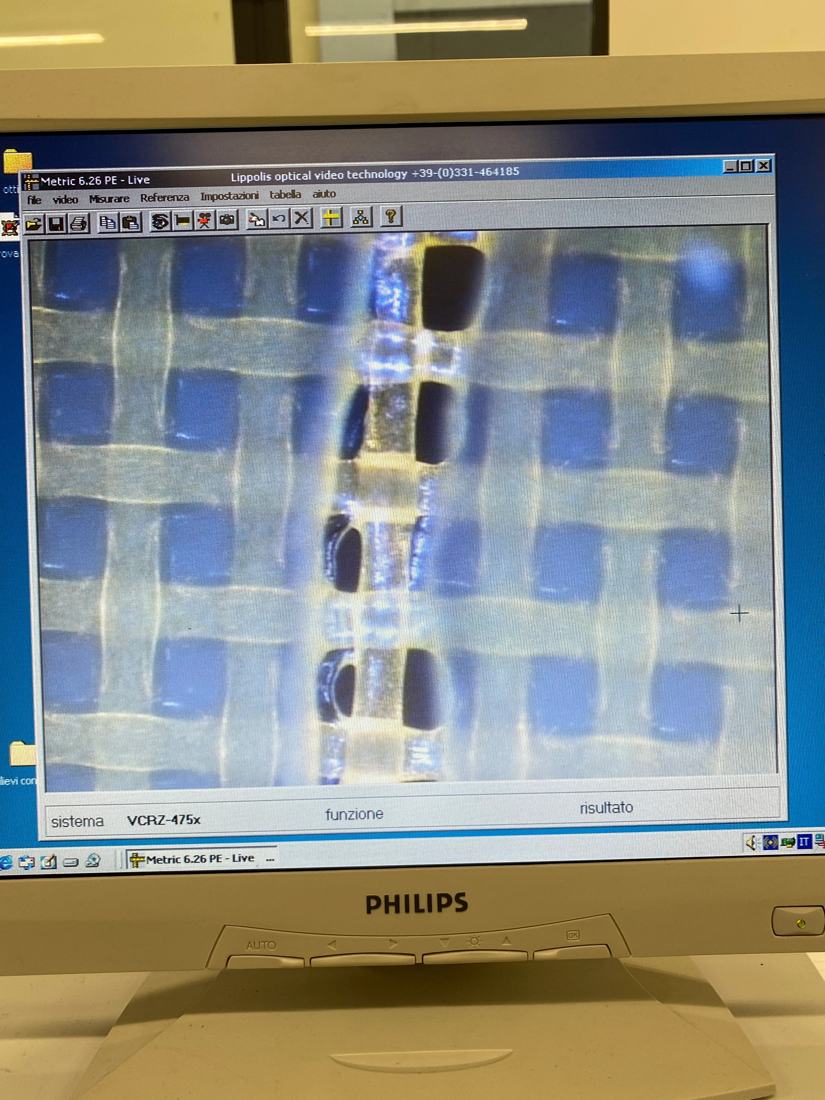
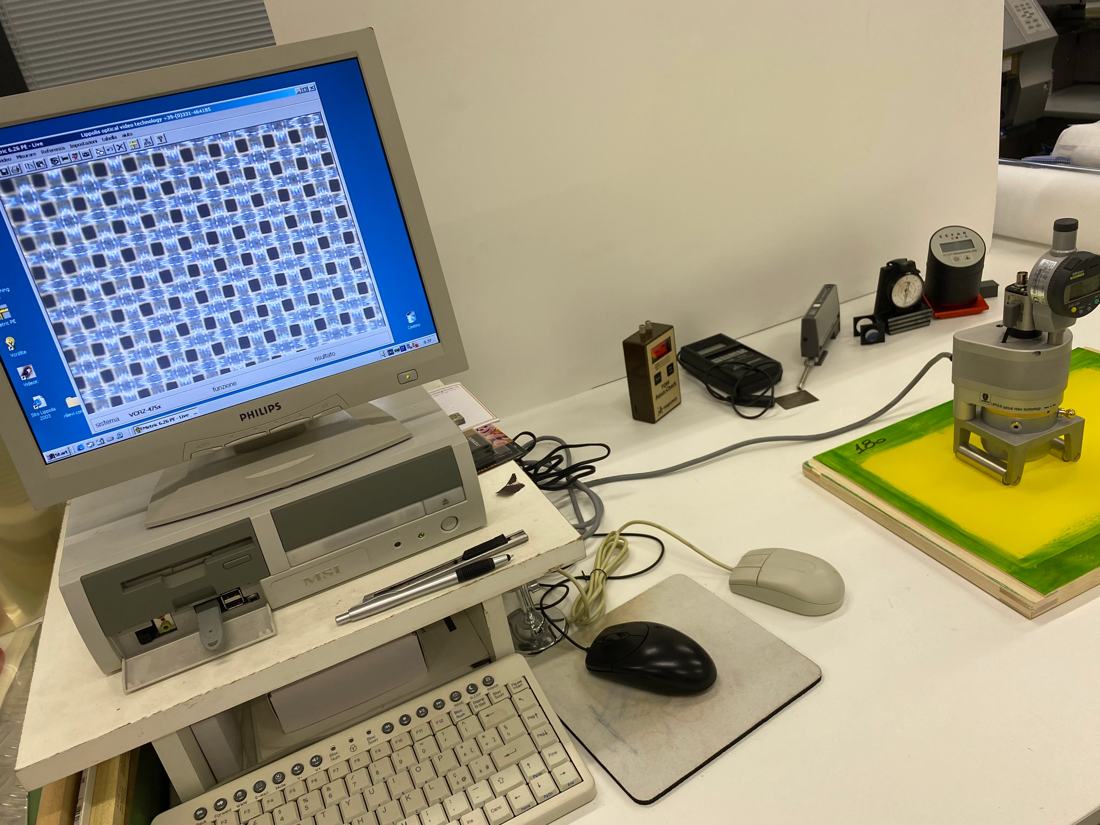
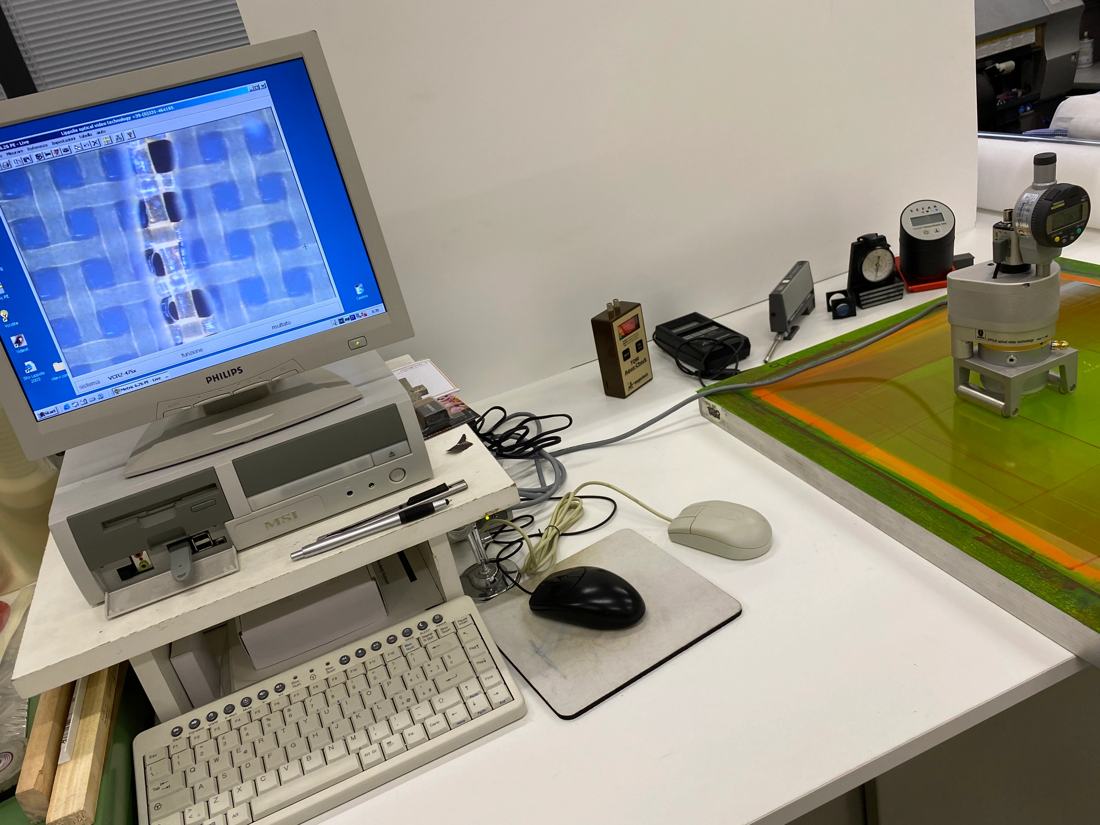
Screentech's research starts with fabric inspection. Every construction is analysed under a microscope to verify the main geometric parameters: thread diameter, mesh opening and weave.
Our range uses PW – Plain Weave, the most widespread and controllable construction for technical screen printing applications.
Once the fabric construction has been verified, the material is stretched onto the frame and coated with the various emulsions selected for producing stencils. The tests include both standard stencils and high-thickness stencils, intended in particular for Braille applications and high-deposit printing.
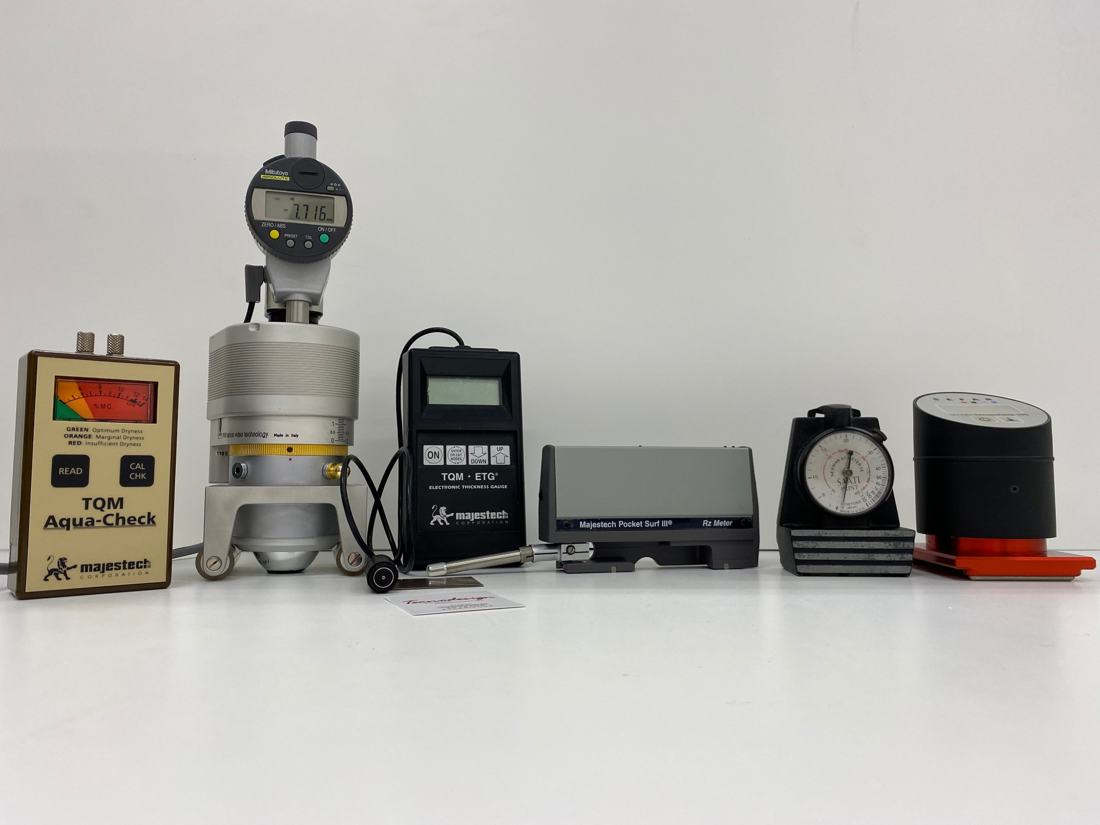
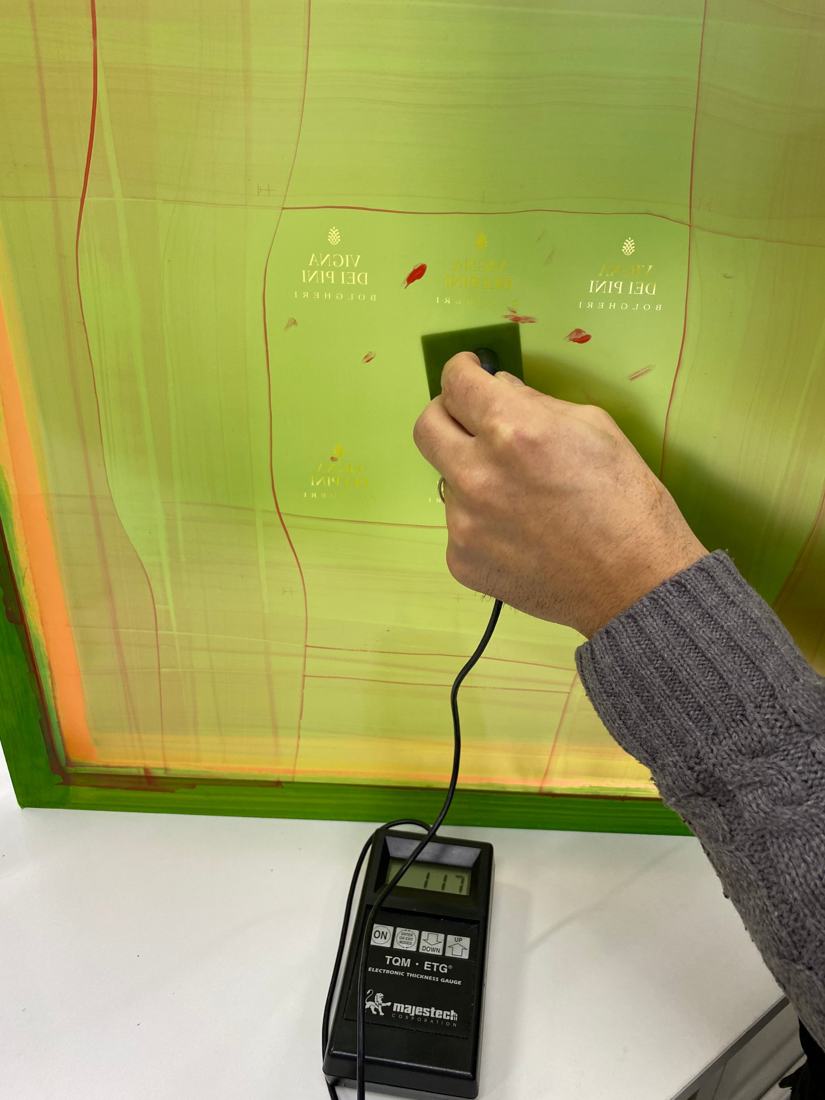
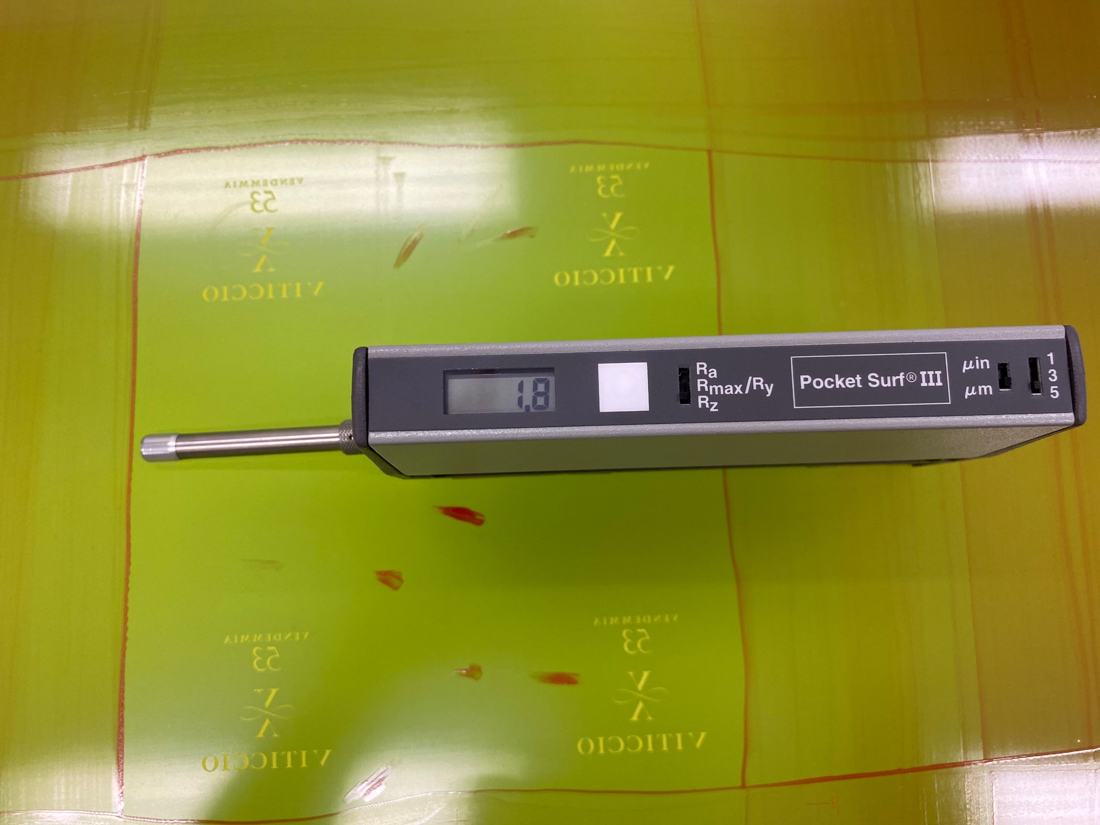
Extreme tests to know the limits
To truly assess the performance of a fabric-emulsion system, we don't limit ourselves to conventional laboratory conditions. We use extreme test files, containing complex graphics, very fine details and different levels of difficulty.
The stencils are exposed using carefully calibrated times and subsequently developed to check the quality of the engraving, the definition of details and the emulsion's ability to maintain the stencil structure.
During development, a water stress test is also carried out, subjecting the stencil to a pressurised, concentrated water jet until, in the most extreme tests, the emulsion detaches from the fabric. This allows us to understand, in a very concrete way, the mechanical strength of the stencil and the behaviour of the fabric-emulsion interface.
Observing what the eye cannot see
After drying, the stencils are analysed again under the microscope, reaching up to 475× magnification.
This observation allows us to study the stencil's behaviour after UV exposure, check the quality of the engraving and identify the closure limits of the finest lines. It is at this stage that we can really understand how capable a given fabric-emulsion combination is of reproducing complex graphics and maintaining the required definition.
Results that surprised us
Our research and validation process has allowed us to achieve results that, in various applications, have exceeded our initial expectations.
But for Screentech, the most important result is not simply obtaining a good stencil. It's understanding why it works, knowing its limits, and turning this knowledge into concrete value for those who use screen printing every day.
This is our method.